


CNC Roughing: Strategies, Parameters & Optimization Guide
CNC Roughing Explained: Strategies, Parameters & Optimization Guide for High-Efficiency Machining
In precision manufacturing, CNC roughing is often underestimated compared to finishing. However, in real machining environments, roughing is where most of the time, cost, and tool wear occur.
A well-optimized roughing strategy not only improves machining efficiency but also ensures stable conditions for the finishing stage.
This guide explains the fundamentals of CNC roughing, including toolpaths, cutting parameters, tooling, and optimization strategies.
What is CNC Roughing?
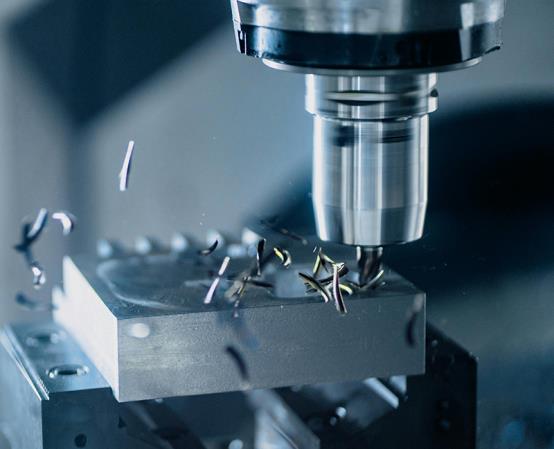
CNC roughing is the initial stage of CNC machining, where large amounts of excess material are removed quickly using aggressive cutting parameters.
The goal is to:
- Remove bulk material efficiently
- Maintain part stability
- Leave a controlled allowance for finishing
A typical machining workflow includes:
- Roughing (bulk removal)
- Semi-finishing (geometry refinement)
- Finishing (precision & surface quality)
CNC Roughing vs Finishing
|
Aspect |
Roughing |
Finishing |
|---|---|---|
|
Objective |
Remove bulk material |
Final precision |
|
Depth of Cut |
2–10 mm |
0.1–0.5 mm |
|
Surface Finish |
Not important |
Critical |
Roughing focuses on efficiency, finishing focuses on accuracy.
CNC Roughing Strategies
1. Traditional Toolpaths
Traditional roughing strategies are geometry-based:
- Offset (Contour-Parallel):Good for pockets but uneven tool load at corners
- Zig-Zag (Raster):Efficient for large areas but unstable cutting forces
- Z-Level Roughing:Step-by-step depth removal, predictable but less efficient
2. Adaptive Toolpaths (Modern Approach)
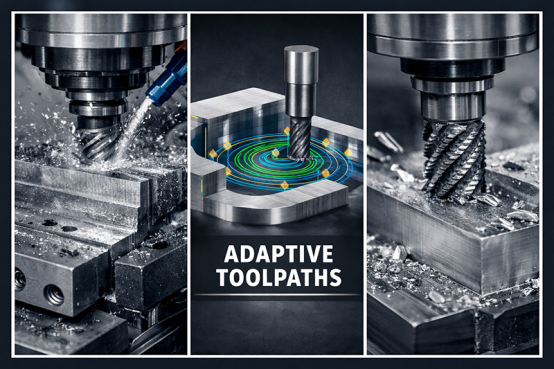
Modern CAM software like Fusion 360 and Mastercam use adaptive (dynamic) toolpaths.
Key advantages:
- Constant tool engagement
- Reduced tool load
- Higher feed rates
- Less tool wear
These toolpaths often follow trochoidal motion, avoiding full-width cuts and improving stability.
Key Cutting Parameters in CNC Roughing
1. Material Removal Rate (MRR)
MRR defines how much material is removed per minute.
For milling:
MRR=ap×ae×f
- ap = axial depth of cut
- ae = radial engagement
- f = feed rate
Typical values:
- Steel: ~100 cm³/min
- Aluminum: 500+ cm³/min
Higher MRR = faster machining, but also:
- More heat
- Higher tool wear
2. Depth of Cut (DOC)
- Axial DOC (ap): along tool axis
- Radial DOC (ae): width of engagement
Typical roughing values:
- Axial: 1–2× tool diameter
- Radial: 40–60% (traditional) / 8–15% (adaptive)
3. Cutting Speed & Spindle Speed
Spindle speed is calculated by:
N = (1000 × V) / (π × D)
Typical cutting speeds:
|
Material |
Cutting Speed (SFM) |
|---|---|
|
Steel |
300–500 |
|
Aluminum |
800–1500+ |
|
Titanium |
80–150 |
|
Inconel |
50–100 |
Harder materials = lower cutting speeds.
Tooling for CNC Roughing
Tool Materials
- Carbide → high performance, high speed
- HSS → cost-effective for softer materials
Tool Design Features
- Fewer flutes (3–6) for chip evacuation
- Large chip gullets
- Serrated (corncob) edges to reduce vibration
Coatings
- TiAlN / AlTiN → heat resistance
- ZrN → ideal for aluminum
Material-Specific Roughing Guidelines
Non-Ferrous Metals (Aluminum, Magnesium)
- High cutting speeds
- High chip load
- Use polished or coated tools
- Prevent built-up edge
Steel & Alloys
- Moderate cutting speeds
- Use coated carbide tools
- Control heat and chip evacuation
Hard Materials (Titanium, Inconel)
- Low cutting speeds
- Stable cutting required
- Avoid tool dwell (prevents work hardening)
Common Challenges in CNC Roughing
1. Tool Wear
Solution:
- Use coated carbide tools
- Apply coolant
- Use adaptive toolpaths
2. Vibration (Chatter)
Solution:
- Reduce tool overhang
- Improve tool holding rigidity
- Adjust radial engagement
3. Chip Evacuation & Heat
Solution:
- Use proper coolant strategy
- Optimize tool geometry
- Avoid chip recutting
How to Optimize CNC Roughing Performance
Adaptive Toolpaths
Maintain constant engagement and increase efficiency.
Rigid Tool Holding
Use:
- Shrink-fit holders
- Hydraulic chucks
Maximize Axial Depth
Use deeper cuts to:
- Improve efficiency
- Reduce cycle time
70/30 Rule in Machining
A common optimization principle:
- 70% material removed in roughing
- 30% refined in finishing
Typical finishing allowance:
- Milling: 0.3–1.0 mm
- Turning: 0.2–0.5 mm per side
FAQs
1.Why is CNC roughing important?
Because it determines machining efficiency, cost, and tool life.
2.How much material should be left?
- Milling: 0.3–1.0 mm
- Turning: 0.2–0.5 mm
3.What is the best roughing strategy?
Adaptive toolpaths are the most efficient.
Why Choose XSH CNC Machining Services?
At XSH, we provide optimized CNC machining solutions:
- 3/4/5-axis machining
- ±0.005 mm tolerance
- Fast delivery
- ISO 9001 certified
Upload your CAD file for a professional machining solution.


