


Clear vs Black Anodizing for Aluminum Parts: Key Differences in Precision CNC Machining
Clear vs Black Anodizing for Aluminum Parts in Precision Machining

In precision CNC machining, anodizing is one of the most widely used surface treatments for aluminum components. Among the various options, clear anodizing (natural anodizing) and black anodizing are the most common choices.
Although both processes fall under anodic oxidation, they differ significantly in surface preparation requirements, dimensional impact, material compatibility, and quality control standards.
Understanding these differences is essential for achieving optimal performance, aesthetics, and cost efficiency.
1. Surface Preparation: Clear Anodizing Is More Demanding
Clear Anodizing (Natural Finish)
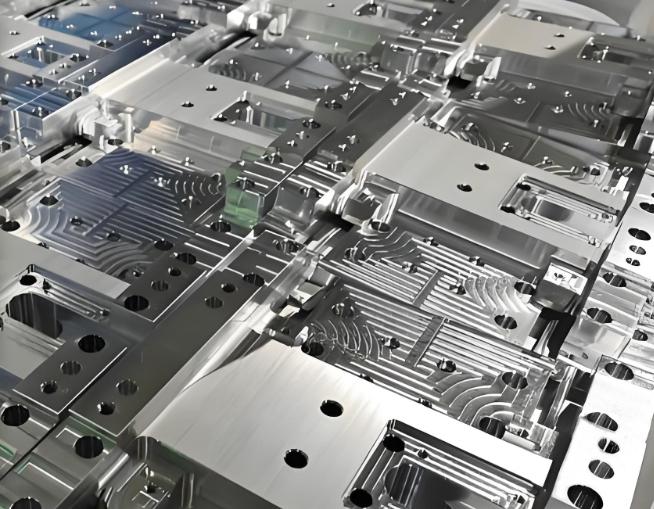
Clear anodizing produces a transparent oxide layer, meaning the final appearance directly reflects the base material condition.
· Extremely sensitive to scratches, tool marks, dents, and fingerprints
· Any surface defect becomes more visible after anodizing
· Material impurities may cause color variation or uneven appearance
· Welded areas often appear as dark patches after treatment
Key takeaway: Clear anodizing acts like a mirror, revealing every imperfection.
Black Anodizing

Black anodizing involves dyeing the porous oxide layer, giving it better visual coverage.
· Can partially mask minor scratches and slight material inconsistencies
· Deep scratches and machining marks may still remain visible
· Requires higher cleanliness standards—poor degreasing leads to uneven coloring or stains
Key takeaway: Black anodizing hides minor defects but amplifies poor pre-treatment.
2. Dimensional Changes & Tolerance Control
Anodizing forms an oxide layer that grows 50% inward and 50% outward, affecting part dimensions.
Clear Anodizing
· Typical thickness: 5–15 μm
· Minimal dimensional change (approx. 2.5–7.5 μm per side)
· Usually no special allowance required for most fits
Black Anodizing
· Thicker coating: 15–25 μm or more
· More significant dimensional variation (7.5–12.5 μm per side)
· Critical for tight tolerances (e.g., H7/g6 fits)
⚠️ Special considerations:
· Threads (especially M3 and smaller) may become too tight
· May require pre-machining allowance or post-anodizing tapping
3. Suitability for Die-Cast Aluminum
Clear Anodizing
· Not suitable for high-silicon die-cast alloys (e.g., ADC12, A380)
· Results in dark gray, uneven, and unacceptable appearance
Black Anodizing
· Slightly better visual masking than clear anodizing
· Still prone to spotting, cloudiness, and uneven color due to silicon particles
Recommendation:
· Avoid anodizing high-silicon die-cast parts for cosmetic purposes
· Consider alternatives:
§ Painting / powder coating
§ Micro-arc oxidation
§ Switching to wrought aluminum (e.g., 6061)
4. Communication & Inspection Standards
|
Criteria |
Clear Anodizing |
Black Anodizing |
|---|---|---|
|
Main focus |
Transparency & uniform appearance |
Color consistency & depth |
|
Supplier communication |
Control etching to avoid over-corrosion |
Confirm thickness & dye specifications |
|
Inspection method |
Visual check under angled lighting |
Compare under D65 light with color standard |
|
Durability check |
Surface clarity & defects |
Alcohol rub test for color fastness |

Practical Recommendations for CNC Machining
1. Choose Based on Function
· Use clear anodizing for:
§ Corrosion resistance
§ Minimal dimensional impact
§ Natural metallic appearance
· Use black anodizing for:
§ Aesthetic requirements
§ Anti-fingerprint surfaces
§ Enhanced visual uniformity
2. Adjust Machining Strategy
· For clear anodizing:
§ Achieve fine surface finishing (polishing level)
§ Eliminate all visible defects before anodizing
· For black anodizing:
§ Prioritize thorough cleaning and degreasing
§ Minor scratches acceptable, but avoid deep marks
3. Always Specify Clearly in Drawings
Include anodizing requirements in technical documentation:
· “Clear anodizing, thickness 5–10 μm”
· “Black anodizing, thickness 15–20 μm, color code specified”
· Indicate whether dimensional allowance is required
Final Thoughts
Clear anodizing and black anodizing serve different purposes in precision machining:
· Clear anodizing highlights manufacturing quality
· Black anodizing improves appearance while tolerating minor imperfections
However, black anodizing also demands stricter process control and dimensional planning.
Understanding these differences ensures better product quality, fewer reworks, and smoother collaboration with anodizing suppliers.


