


CNC Machining Cost Guide: How to Save Up to 30% on Your Next Project
CNC Machining Cost: How to Save Up to 30% on Your Next Project
CNC machining technology is one of the most reliable and precise manufacturing methods for producing custom metal and plastic parts. It is widely used in aerospace, medical devices, optics, robotics, automotive, and industrial equipment.
One of the most common questions buyers ask is:
How much does CNC machining cost?
The answer depends on several variables, including material selection, part complexity, tolerances, surface finishing, and order quantity.
In this comprehensive guide, you'll learn:
- How CNC machining costs are calculated
- Typical hourly rates and price ranges
- Key factors that drive costs up or down
- Proven strategies to reduce CNC machining costs by up to 30%
- Real-world industry examples
Whether you are sourcing a prototype or mass production, this article will help you make smarter purchasing decisions.
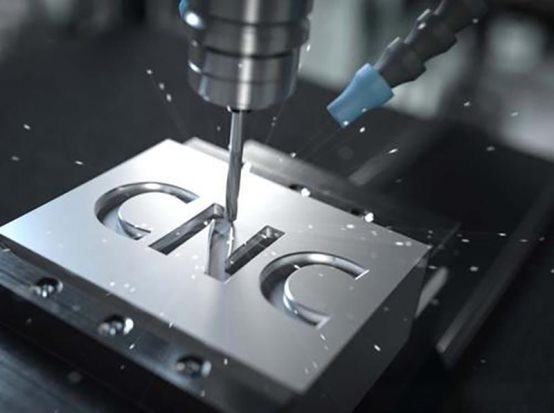
CNC Machining Cost Calculator (Simple Formula)
CNC Machining Cost Calculator
A simplified formula to estimate CNC machining cost is:
Total Cost = Material Cost + (Machining Time × Hourly Rate) + Setup Cost + Finishing Cost + Inspection + Shipping
Example Calculation
Suppose you need an aluminum part with the following requirements:
- Material: Aluminum 6061-T6 → $20
- Machining time: 1 hour
- Machine hourly rate: $60/hour
- Setup/programming: $25
- Anodizing: $30
- Packaging: $10
Total Cost = $20 + $60 + $25 + $30 + $10 = $145
This formula provides a useful estimate, but actual pricing depends on many additional factors.
Understanding CNC Machining Costs
CNC machining costs can vary from a few dollars for simple parts to several hundred dollars for complex precision components.
Typical CNC Machining Cost Ranges
|
Part Type |
Typical Price Range |
|
Simple aluminum prototype |
$30–$150 |
|
Precision stainless steel part |
$80–$400 |
|
Complex 5-axis aerospace component |
$200–$1,500+ |
|
High-volume production part |
$2–$50 per piece |
Key Factors That Affect CNC Machining Cost
1. Machine Type: 3-Axis vs 5-Axis CNC
The type of CNC machine used has a major impact on cost.
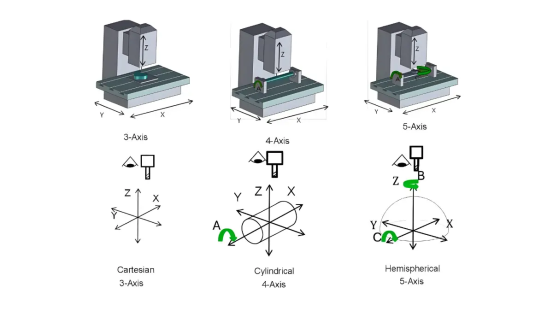
3-Axis CNC Machining
- Lowest machining cost
- Ideal for simple prismatic parts
- Most common manufacturing method
4-Axis and 5-Axis CNC Machining
- Handles complex geometries
- Reduces multiple setups
- Requires advanced programming
- Higher machine investment and hourly rates
Typical Hourly Rates
|
Machine Type |
Hourly Rate |
|
3-Axis CNC Mill |
$30–$80/hr |
|
CNC Lathe |
$40–$90/hr |
|
5-Axis CNC Machine |
$80–$200/hr |
|
Swiss-Type CNC |
$70–$150/hr |
Cost Tip: Use 3-axis machining whenever possible to reduce costs.
2. Material Selection
Material costs and machinability significantly influence pricing.
Easy-to-Machine Materials
- Aluminum 6061
- Brass
- Delrin (POM)
- ABS
Difficult-to-Machine Materials
- Stainless Steel 316
- Titanium
- Inconel
- Hardened Tool Steel
- PEEK
Material Cost Comparison
|
Material |
Relative Cost |
Machinability |
|
Aluminum 6061 |
Low |
Excellent |
|
Aluminum 7075 |
Medium |
Excellent |
|
Stainless Steel 304 |
Medium |
Moderate |
|
Stainless Steel 316 |
High |
Moderate |
|
Titanium Grade 5 |
Very High |
Difficult |
|
Inconel 718 |
Extremely High |
Very Difficult |
|
PEEK |
Very High |
Good |
Cost Tip: Choose Aluminum 6061 when performance requirements allow.
3. Part Design Complexity
The more complex the geometry, the higher the CNC machining cost.
Features That Increase Costs
- Deep pockets
- Thin walls
- Tiny holes
- Internal sharp corners
- Complex 3D surfaces
- Undercuts
- Multiple setups
Design for Manufacturability (DFM)
Applying DFM principles can substantially reduce machining time and cost.
Examples:
- Increase internal corner radius
- Avoid unnecessary cosmetic features
- Standardize hole sizes
- Reduce wall thickness sensitivity
4. Tolerance Requirements
Tighter tolerances require slower machining, better tooling, and more inspection.
Common CNC Tolerances
|
Tolerance |
Cost Impact |
|
±0.10 mm (±0.004") |
Low |
|
±0.05 mm (±0.002") |
Moderate |
|
±0.01 mm (±0.0004") |
High |
|
±0.005 mm |
Very High |
Cost Tip: Specify tight tolerances only on critical dimensions.
5. Surface Finish and Post-Processing
Secondary operations add both labor and outsourcing costs.
Common Finishing Processes
- Anodizing
- Sandblasting
- Powder coating
- Electropolishing
- Heat treatment
- Black oxide
- Nickel plating
- Passivation
Typical Finishing Costs
|
Process |
Typical Cost |
|
Deburring |
$2–$10 |
|
Sandblasting |
$5–$20 |
|
Anodizing |
$10–$50 |
|
Hard Anodizing |
$20–$100 |
|
Heat Treatment |
$20–$150 |
6. Production Volume
Quantity has a significant impact on per-part cost.
Low-Volume Production
- Higher unit cost
- Setup cost spread over fewer parts
- Ideal for prototyping and testing
High-Volume Production
- Lower unit cost
- Better material pricing
- Automation opportunities
Example
|
Quantity |
Total Cost |
Cost Per Part |
|
1 |
$150 |
$150 |
|
10 |
$600 |
$60 |
|
100 |
$2,500 |
$25 |
|
1,000 |
$12,000 |
$12 |
7. Setup and Programming Costs
Every new part requires:
- CAM programming
- Tool selection
- Fixture setup
- First article inspection
Typical setup costs range from $50 to $500+, depending on complexity.
8. Inspection and Quality Control
High-precision industries require extensive verification.
Inspection Methods
- Calipers and micrometers
- Height gauges
- CMM inspection
- Surface roughness testing
- Material certifications
Quality Documents
- First Article Inspection (FAI)
- Certificate of Conformance (COC)
- Material Certificates
- Inspection Reports
9. Packaging and Shipping
Export packaging and international shipping can add significant costs.
Factors include:
- Part size and weight
- Protective packaging
- Courier vs freight
- Customs duties
Common CNC Machining Processes and Their Costs
CNC Milling Cost
CNC milling is ideal for complex 3D parts.
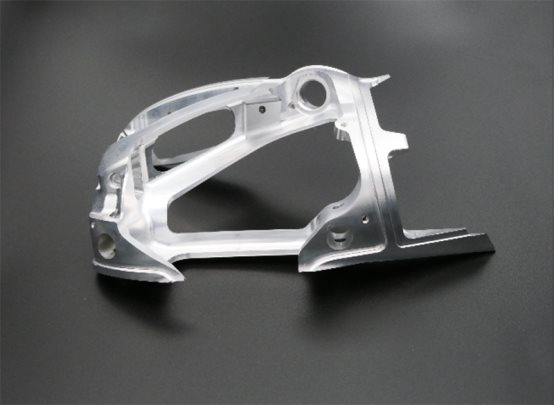
Applications
- Optical housings
- Fixtures
- Aerospace brackets
- Medical components
Cost Range
- Prototype parts: $30–$500+
- Production parts: $5–$100+
CNC Turning Cost
CNC Turning is best for cylindrical parts such as shafts and bushings.
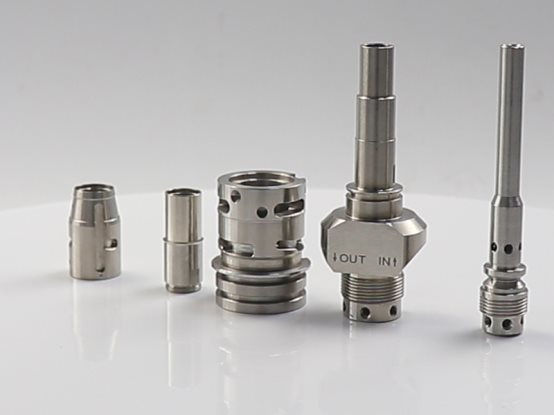
Applications
- Shafts
- Fittings
- Connectors
- Spacers
Cost Range
- Simple parts: $10–$100
- Precision turned parts: $50–$300+
EDM and Wire EDM Cost
Electrical Discharge Machining(EDM/WEDM) is suitable for hardened metals and intricate geometries.
Applications
- Mold components
- Small slots
- Tight internal corners
Cost Range
- $80–$200/hour
CNC Grinding Cost
CNC Grinding is used when extremely tight tolerances and superior finishes are required.
Applications
- Bearing components
- Optical parts
- Precision shafts
Cost Range
- $60–$180/hour
Industry-Specific CNC Machining Costs
Aerospace CNC Machining Cost
Aerospace parts demand:
- Tight tolerances
- Exotic materials
- Full traceability
- Certification requirements
Typical Cost Range
$100–$400+ per part for low-volume components.
Medical CNC Machining Cost
Medical parts require:
- Biocompatible materials
- Mirror-like finishes
- Regulatory compliance
Typical Cost Range
$80–$250 per part.
Automotive CNC Machining Cost
Automotive manufacturing emphasizes:
- High-volume efficiency
- Automation
- Cost optimization
Typical Cost Range
$5-$50 per part.
15 Proven Ways to Reduce CNC Machining Costs by Up to 30%
1. Simplify Part Geometry
Avoid unnecessary curves, contours, and cosmetic details.
2. Use Standard Materials
Choose widely available stock sizes and common grades.
3. Relax Non-Critical Tolerances
Reserve tight tolerances for functional dimensions only.
4. Increase Internal Radii
Larger radii allow faster cutting with standard tools.
5. Reduce Setup Changes
Design parts that can be machined in fewer operations.
6. Consolidate Multiple Parts
Reduce assembly costs by combining components.
7. Use Standard Hole Sizes and Threads
Avoid custom tooling.
8. Minimize Deep Cavities
Keep depth-to-tool-diameter ratios manageable.
9. Limit Surface Treatments
Apply finishing only where needed.
10. Increase Order Quantity
Spread setup costs across more parts.
11. Submit Complete 2D and 3D Drawings
Clear documentation prevents costly misunderstandings.
12. Specify Material Alternatives
Allow equivalent grades when acceptable.
13. Combine Multiple RFQs
Larger projects often receive better pricing.
14. Plan Ahead
Avoid rush charges by ordering early.
15. Work with an Experienced CNC Manufacturer
An experienced supplier can recommend cost-saving improvements.
Real-World Cost Saving Example
A customer required an aluminum optical housing.
Original Design
- 5-axis machining
- ±0.01 mm tolerance on all dimensions
- Full hard anodizing
- Quantity: 10 pcs
Optimized Design
- Converted to 3-axis machining
- Tight tolerances only on critical surfaces
- Standard anodizing
- Quantity increased to 50 pcs
Result
- Original price: $180/pc
- Optimized price: $122/pc
- Savings: 32%
CNC Machining Cost Comparison by Material
|
Material |
Prototype Cost |
Production Cost |
|
Aluminum 6061 |
Low |
Very Low |
|
Brass |
Low |
Low |
|
Stainless Steel 304 |
Medium |
Medium |
|
Stainless Steel 316 |
Medium-High |
Medium-High |
|
Titanium |
High |
High |
|
Inconel |
Very High |
Very High |
|
PEEK |
High |
High |
When CNC Machining Is the Best Choice
CNC machining is ideal when you need:
- Tight tolerances
- Excellent surface finish
- High-strength materials
- Fast prototype turnaround
- Low to medium production quantities
For very high-volume plastic parts, injection molding may be more cost-effective.
Why Choose XSH Precision for Cost-Effective CNC Machining?
Choosing the right CNC machining partner can significantly reduce your manufacturing costs while ensuring consistent quality and on-time delivery. At XSH Precision, we help customers save up to 30% through efficient production, competitive factory-direct pricing, and expert engineering support.
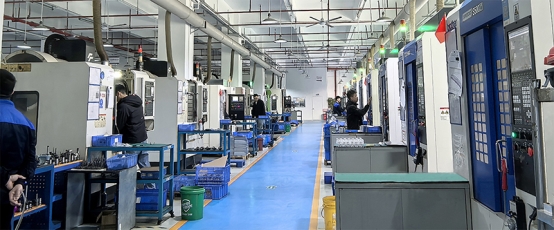
Why Customers Choose XSH Precision
- 15+ Years of Experience in precision CNC machining for laser, medical, optical, and automation industries.
- Competitive Pricing with direct factory supply from Shenzhen, China.
- DFM Support to optimize part designs and reduce machining costs. High Precision with tolerances up
- to ±0.005 mm.
- Wide Material Capability including aluminum, stainless steel, brass, titanium, PEEK, PTFE, and Delrin.
- Flexible Quantities from prototypes to mass production. Fast Lead Times with prototype parts
- delivered in as little as 3–7 working days.
- Complete Finishing Services such as anodizing, plating, passivation, and laser marking.
- Strict Quality Control with CMM inspection and material certifications.
- Worldwide Shipping via UPS, DHL, FedEx and Air / Sea shipment.
Your Reliable CNC Machining Partner
At XSH Precision, we combine advanced CNC equipment, experienced engineers, and responsive customer service to deliver high-quality machined parts at the best possible price.
Send us your drawings today for a fast quote and discover how XSH Precision can help lower your CNC machining costs.


