


Electroplating vs Electrophoresis Coating: Complete Guide to Metal Surface Treatment
Electroplating vs. Electrophoresis Coating: Differences, Advantages, and Applications
1. Introduction
In the field of metal surface treatment, electroplating and electrophoretic coating (e-coating) are two widely used processes that are often confused.
When selecting surface finishing solutions, many companies make inappropriate choices due to a lack of understanding of the fundamental differences between these two technologies, resulting in increased costs or products failing to meet performance requirements.
This article provides a comprehensive comparison of electroplating and electrophoresis coating, covering their principles, process characteristics, advantages, limitations, and applications, helping engineers and manufacturers select the most suitable surface treatment method.
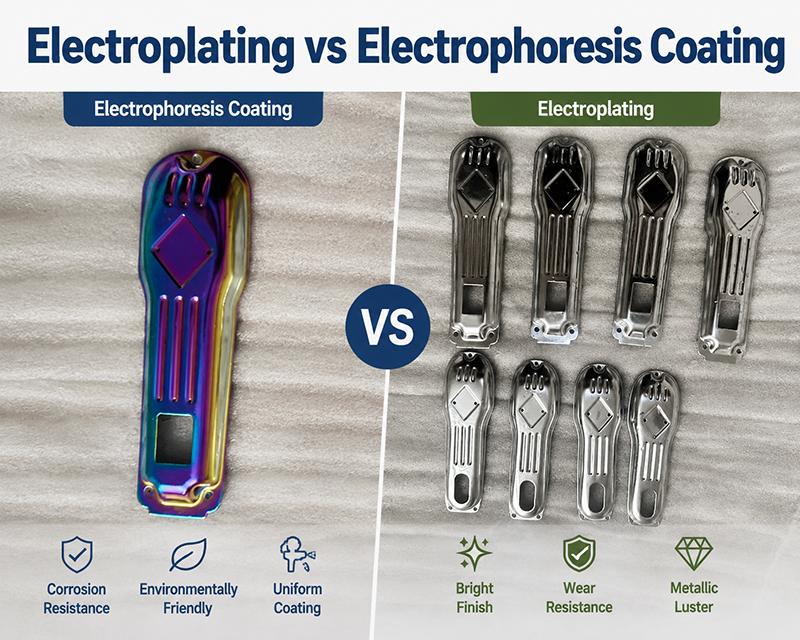
2. What Is Electroplating?
Electroplating is a surface treatment process that deposits a layer of metal or alloy onto a conductive substrate using the principle of electrolysis.
Simply explained:
The workpiece acts as the cathode and is immersed in an electrolyte solution containing metal ions. When an external electric current is applied, metal ions are reduced into metal atoms and deposited onto the surface of the workpiece, forming a metallic coating.
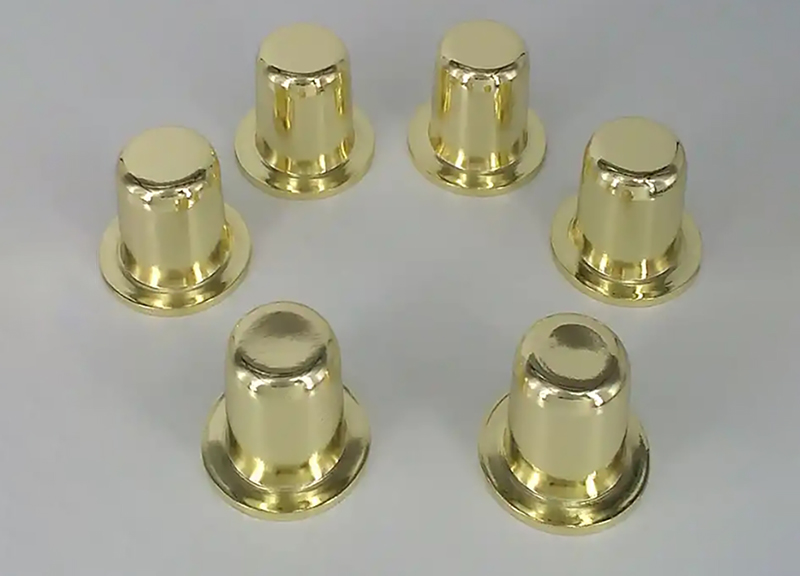
Characteristics of Electroplating Layers
Electroplated coatings have:
- Metallic crystal structures
- Strong metallic luster
- Mirror-like appearance
The main purposes of electroplating include:
- Preventing oxidation and corrosion
- Improving wear resistance
- Enhancing electrical conductivity
- Increasing reflectivity
- Improving decorative appearance
Common Types of Electroplating
Typical electroplating processes include:
- Zinc plating
- Nickel plating
- Chrome plating
- Copper plating
- Gold plating
- Silver plating
3. What Is Electrophoretic Coating (E-Coating)?
Electrophoretic coating is a process in which charged paint particles migrate toward and deposit onto a workpiece surface under the influence of an electric field, forming an organic protective coating.
Electrophoresis is mainly divided into:
- Anodic electrophoresis
- Cathodic electrophoresis
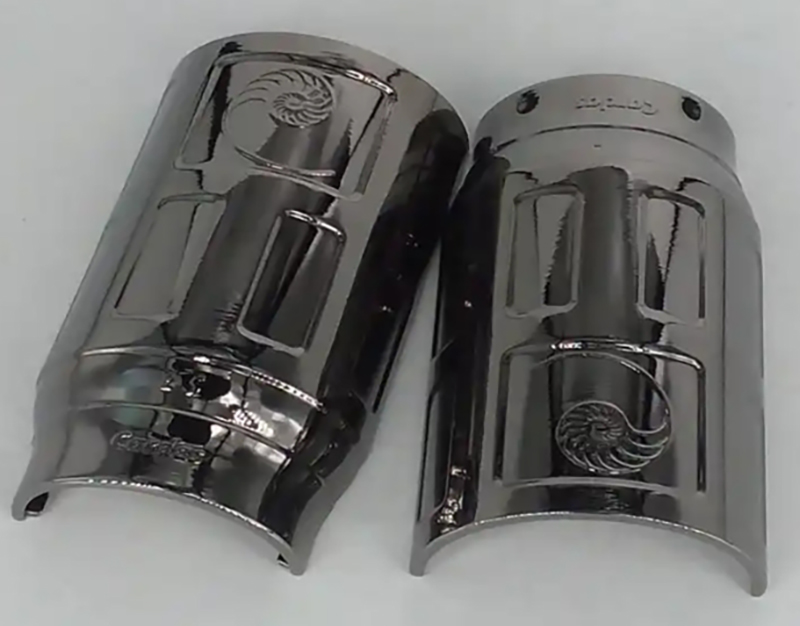
Characteristics of Electrophoretic Coatings
Unlike electroplating, electrophoretic coatings are:
- Organic polymer films
- Non-metallic structures
- Smooth surface coatings
The gloss level is generally lower than electroplated finishes.
Electrophoretic paint mainly uses water as the solvent, with extremely low organic solvent content, making it environmentally friendly.
Key Advantages of Electrophoresis
Electrophoretic coating offers:
- Paint utilization rate of 90%–98%
- Excellent coating adhesion
- Outstanding corrosion resistance
- Uniform coverage on complex geometries
4. Key Differences Between Electroplating and Electrophoresis
4.1 Different Principles and Processes
Electroplating
Electroplating is the reduction and deposition of metal ions into metal atoms through an electrochemical reaction.
It creates:
A metallic coating layer
Electrophoresis
Electrophoresis involves charged resin particles migrating under an electric field and forming an organic coating through deposition and curing.
It creates:
A protective paint film
Simply put:
Electroplating = applying a layer of metal
Electrophoresis = applying a layer of protective coating
4.2 Appearance and Surface Texture
Electroplating
Advantages:
-
Bright metallic appearance
-
Mirror-like finish
-
Premium metal texture
Suitable for products requiring:
-
Decorative metal appearance
-
High reflectivity
-
Luxury finishes
Electrophoresis
Advantages:
- Smooth and uniform surface
- Wide range of colors
- Matte, glossy, or pearl effects available
However, it cannot fully reproduce the metallic feel of electroplating.
4.3 Coating Thickness Uniformity
Electroplating
Electroplating thickness varies depending on electrical potential distribution.
Limitations:
-
High-current areas receive thicker coating
-
Low-current areas receive thinner coating
-
Deep holes and internal cavities may have insufficient coverage
Electrophoresis
Electrophoretic coating provides excellent:
Throwing power
Meaning:
- Uniform coating thickness
- Excellent coverage inside cavities
- Better protection on complex geometries
4.4 Functional Performance Comparison
Electroplating Provides:
-
Electrical conductivity
-
Wear resistance
-
Solderability
-
Hard surface properties
Typical applications:
-
Electronic components
-
Mechanical wear parts
-
Functional coatings
Electrophoresis Provides:
-
Excellent corrosion protection
-
Strong adhesion
-
High impact resistance
-
Superior salt spray resistance
The coating is electrically insulating and mainly used for corrosion protection.
4.5 Environmental Comparison
Electroplating
Electroplating wastewater may contain:
- Chromium ions
- Cadmium
- Nickel
- Silver
- Cyanides
Treatment is:
- Complex
- Expensive
- Strictly regulated
Electrophoresis
Electrophoretic coatings use water-based systems with:
- Very low VOC emissions
- Less waste generation
- High paint recovery efficiency
Unused coating materials can be recycled through:
- Ultrafiltration
- Reverse osmosis systems
Therefore, electrophoresis is generally more environmentally friendly.
4.6 Cost Comparison
Electroplating
Higher costs due to:
-
Metal salt solutions
-
Complex process control
-
Wastewater treatment requirements
Electrophoresis
More economical because of:
-
High coating utilization
-
Lower material waste
-
Simpler production process
5. Typical Applications
5.1 Applications of Electroplating
Electronic Components
Used for:
-
Improving conductivity
-
Enhancing solderability
Examples:
-
Electrical connectors
-
PCB terminals
Bathroom Hardware
Applications:
-
Chrome plating
-
Nickel plating
Benefits:
-
Mirror appearance
-
Premium metallic finish
Mechanical Components
Hard chrome plating improves:
-
Wear resistance
-
Surface hardness
Examples:
-
Guide rods
-
Shafts
-
Hydraulic components
Jewelry and Eyewear
Applications:
-
Gold plating
-
Silver plating
Used for:
-
Decorative appearance
-
Premium finishes
5.2 Applications of Electrophoresis
Automotive Bodies and Chassis
Cathodic electrophoresis is widely used as an automotive primer because of:
-
Excellent corrosion protection
-
Uniform coverage
Home Appliances and Hardware
Advantages:
-
Uniform coating
-
Multiple colors
-
Strong weather resistance
Construction Hardware
Examples:
-
Locks
-
Door handles
Benefits:
-
Corrosion resistance
-
Maintains metallic appearance
Tools and Agricultural Equipment
Suitable for:
-
Complex shapes
-
High corrosion requirements
-
Mass production
Bicycle Components and Eyewear Frames
Used on:
-
Aluminum parts
-
Titanium components
Providing:
-
Decorative appearance
-
Protective coating
6. Combined Application: Electroplating + Electrophoresis
In real industrial applications, electroplating and electrophoresis are not always alternatives.
Many high-end products use a combined process:
Electroplating + Electrophoretic Coating
Typical process:
- Apply a metallic coating
(such as copper, nickel, or chrome) - Apply transparent or colored electrophoretic coating
This combination provides:
Benefits:
- Retains metallic appearance
- Improves corrosion resistance
- Provides more color options
- Enhances product durability
Applications include:
- Locks
- Eyewear frames
- Automotive wheels
- Decorative hardware
7. How to Choose Between Electroplating and Electrophoresis?
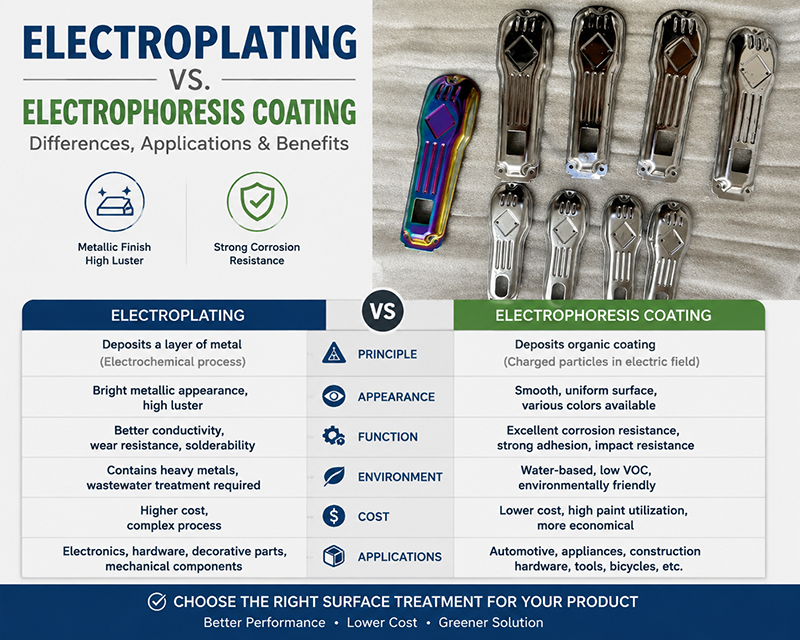
| Requirement | Recommended Process |
|---|---|
| Metallic appearance and premium texture | Electroplating |
| Electrical conductivity requirement | Electroplating |
| Wear resistance requirement | Electroplating |
| Maximum corrosion protection | Electrophoresis |
| Complex shapes with cavities | Electrophoresis |
| Environmental requirements | Electrophoresis |
| High-volume production with cost control | Electrophoresis |
| Both appearance and corrosion resistance | Electroplating + Electrophoresis |
8. Conclusion
Electroplating and electrophoresis each have unique advantages.
Electroplating excels in:
- Decorative appearance
- Functional properties
- Conductivity
- Wear resistance
Electrophoresis excels in:
- Corrosion protection
- Environmental performance
- Uniform coating coverage
There is no absolute winner between the two processes.
The correct choice depends on:
- Operating environment
- Functional requirements
- Appearance requirements
- Cost considerations
For high-performance products requiring both aesthetics and durability, the combination of electroplating and electrophoresis provides an excellent solution.


